Barbershops Don't Lose Clients, They Lose Visits
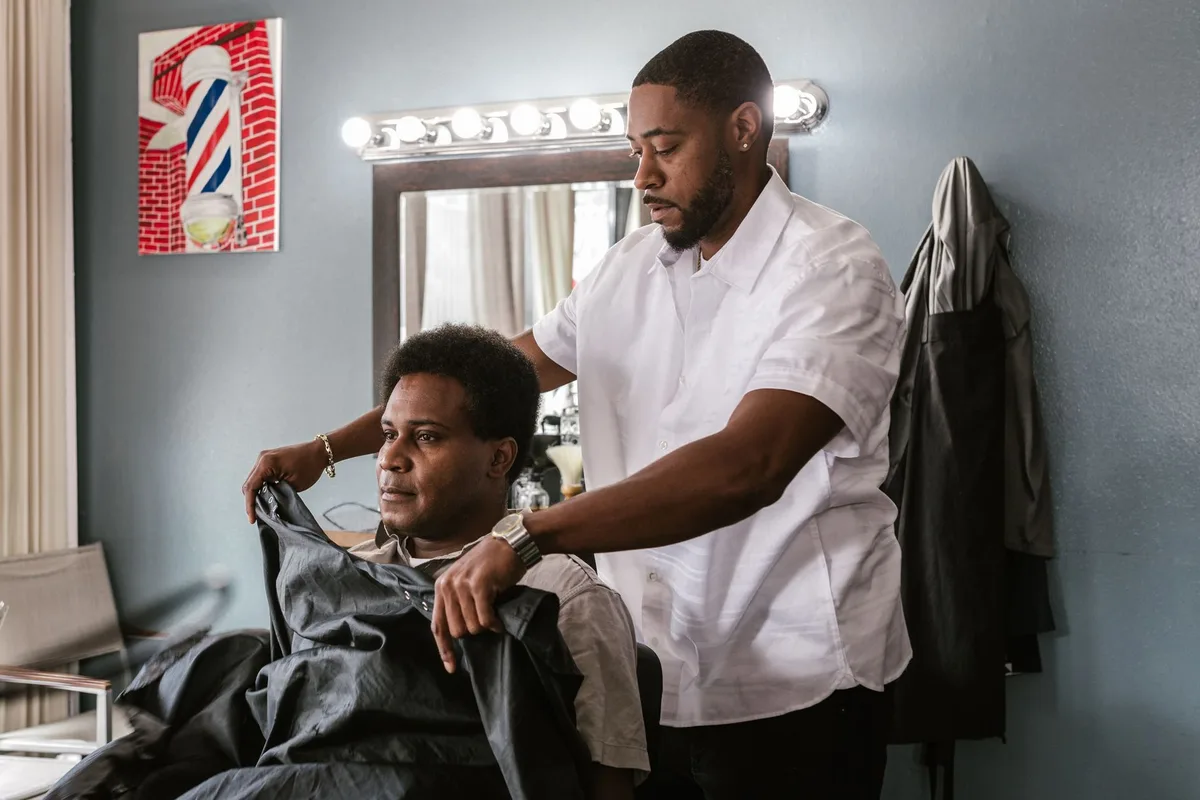
Your Thursday regular came in last week. He said hello, talked about the game, and left happy. What you didn’t see is that he hadn’t been in for six weeks.
A barbershop rarely loses a client all at once. It loses visits, one at a time, and another chair picks them up. Here’s what I’ve learned working with barbers on this question.
Why a Barbershop Loses Visits Without Noticing
A barber’s cut holds for three or four weeks. After that, the fade stops looking like much, and the client knows it. That short cycle is a barbershop’s strength: a regular comes back fifteen or so times a year.
It’s also what makes the slide invisible. A client who drifts from three weeks to five is still a familiar face at the front desk. Nobody worries, since he keeps coming back. But between those two rhythms, several cuts a year go missing, and they were done somewhere else: at the barber near his office, on a Saturday when you were fully booked.
💡 What I see with our clients: Owners who open the visit history of their regulars are often surprised. Several clients they thought ran like clockwork have slipped from three weeks to five or six, and nobody at the front desk noticed.
Book the Next Two Cuts, Not Just the Next One
The barber who books the next cut before the client gets out of the chair is already doing the essential. In a barbershop, you can go one step further: offer the same slot, at the same time, for the next two visits.
A barber’s regular likes his routine. “Thursday at 5, every three weeks” becomes an appointment he no longer has to organize, like his workout or his Tuesday hockey game. Barbershops that work this way see a noticeably fuller book in advance, and regulars who keep their rhythm without thinking about it.
The client can always move a date. What matters is that he leaves with a date to move rather than with nothing.
Spot the Regulars Who Are Slipping Before They Become Strangers
You can’t watch what you don’t look at. Once a month, pull the list of clients whose last visit was more than five weeks ago. For a barbershop, that’s the signal: the client has passed his cycle. He isn’t lost, he’s slipping.
That’s where follow-up matters, and above all its timing. A message that lands at the end of the client’s usual cycle, rather than on a fixed date for everyone, gets a clearly better response: it arrives just as he’s thinking he’s due. And it carries more weight coming from his barber than from the shop: “It’s been five weeks, want me to hold Thursday at 5 for you?”
Clients Are Loyal to Their Barber, Not the Shop
In a barbershop, the relationship is personal. The client comes back for the barber who knows his cut by heart. That’s a strength as long as that barber stays, and it’s why tracking happens barber by barber: returns dropping for one barber don’t mean the same thing as a shop-wide dip.
⚠️ The mistake to avoid: Leaving client history in each barber’s head or phone. The day a barber leaves the shop, a notable share of his clientele disappears with him, especially when the shop didn’t even know who came for him, or how often. A client file kept by the shop won’t hold on to everyone, but at least it tells you who to call.
Conclusion
A barbershop protects itself less by attracting new clients than by keeping the rhythm of the ones it already has. The slide from three weeks to five doesn’t show at the front desk. It shows in the history.
At Flowcut, every client file shows the last visit, and the Win-back email segment targets clients whose last visit was more than the number of days you choose, five weeks or six months. The retention report by employee shows, barber by barber, the clients who came back and the ones who were lost. And the Pre-book button sets the next cut before the client gets out of the chair.