Your Service Menu Is Written for the Clients You Already Have
Your service menu is the first screen a new client sees, and it is the one document in the salon nobody ever rereads. It was written once, by people who already know every line by heart. When we bring a salon online, a good part of the work is not about the software at all. It is about that text.
1. The service name means nothing to someone who has never come in
CC, long BB, toner, Signature Package. Those names are perfectly clear to your team and to your regulars. Which means they are clear to exactly the people who do not need the menu.
The new client, the one the menu is meant to catch, is the one who cannot read it. They will not message you to ask what a CC is. They will pick the line they do understand, usually the plainest one, or close the page.
The test is a single question: could someone who has never set foot in your salon guess what they are buying?
⚠️ The trap to avoid: Fixing technical jargon by switching to marketing jargon. “Signature Radiance Experience” is no clearer than “toner”, it is only opaque in a different way. The right word is the one your client would use themselves.
2. Two lines look alike and nothing says which one is theirs
Women’s cut, and cut and blow dry. Three facials whose descriptions overlap. At the front desk this is not a problem: the client asks, you answer in ten seconds, and you often steer them toward the service that actually suits them.
Online, that conversation never happens. Nobody calls you to settle a choice between two lines of your own menu, they close the tab. And that missed appointment will not show up anywhere in your numbers, because there is nothing to count.
When two services sit side by side, say in one sentence who each one is for.
3. The duration is written nowhere
A client is not booking a service, they are booking a piece of their day. As long as they do not know whether to set aside forty-five minutes or three hours, they cannot decide, so they put it off.
💡 What I see with our clients: Salons that add a duration and one line of explanation to every service see a noticeable drop in calls that start with “I just wanted to know what the difference is between the two”. The question had already been answered before it was asked.
The duration does double duty. It reassures the client, and it is what decides which slots your calendar offers. An approximate duration produces approximate availability.
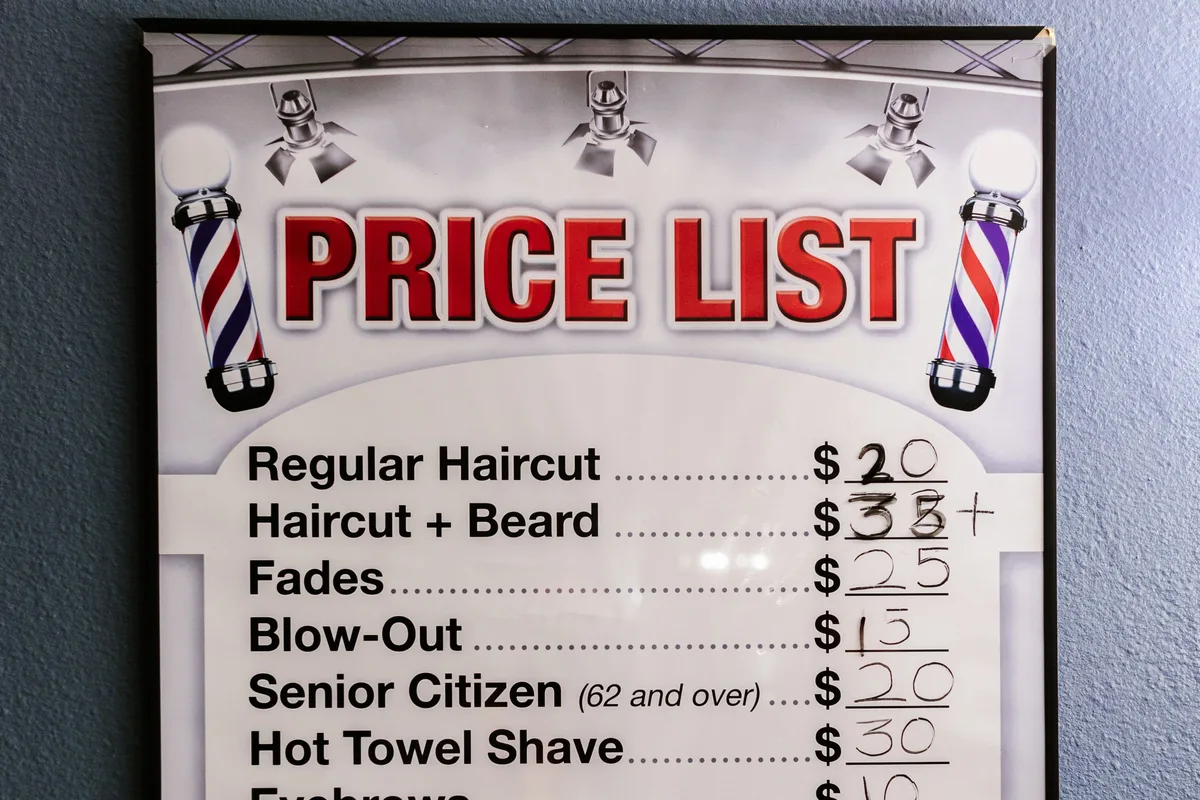
4. The price says “on consultation”
That is often a fair precaution: colour on long hair and a root touch-up do not cost the same. The trouble is that a missing price does not read as caution. It reads as expensive.
Salons that replace a missing price with a “from” price see a clear rise in bookings on those specific services. The client does not need the exact amount, they need to know what range they are committing to.
The test with someone who does not know you
Have someone from outside the salon read your menu, explain nothing, and simply ask which one they would pick. Every time they hesitate, you have found a line that is costing you appointments.
The other clue is already in your numbers. A service nobody ever books is not necessarily a service nobody wants. It is more often a service nobody understood.
At Flowcut, your service catalogue shows the price, the duration and the description at the exact moment the client is choosing, not in a separate document. The duration you enter drives the availability calculation directly, so writing it properly does double duty. And revenue reports by service show you plainly which ones never come up.